The Cost of Unrealistic Sales Targets: How One Distribution Company Closed a ~30-Point Gap in Goal Achievement*
Industry: Distribution & Consumer Goods
Service Provided: Sales Strategy | Sales Leadership | Performance Management | Business Growth Consulting
The Challenge
A growing distribution company had one objective every month: increase sales.
Leadership believed that setting ambitious targets would push the sales force to perform at a higher level. Each month, the number went up, with little regard for historical performance, market conditions, customer demand, or available inventory.
The logic seemed simple: set the bar higher and people will clear it.
At first, the sales team took the challenge. They worked longer hours, visited more customers, and pushed for every deal in reach.
Then came several months of missed targets in a row, and something started to change. Not in the market. In the people.
The Hidden Cost
Management noticed the obvious problem first: the numbers weren't landing.
What they missed was the damage happening underneath.
Sales reps stopped celebrating small wins, because a strong week still ended below target. Monthly meetings turned from motivational check-ins into uncomfortable explanations. Instead of talking about opportunity, the team spent its energy defending performance.
Eventually, even the top performers started asking whether the effort mattered. The problem was never a lack of activity. It was a loss of belief.
The Operational Impact
Unrealistic targets don't stay contained to the sales floor. They spread through the business.
Leadership built purchasing decisions on inflated forecasts. Inventory climbed to cover demand that never showed up, and cash sat tied up in slow-moving stock. Marketing campaigns were sized for revenue that didn't materialize. Operating budgets assumed growth that never came.
Finance started questioning why forecasts kept missing. Operations questioned the inventory plan. Sales questioned leadership. Every department was working off numbers that no longer matched reality, and the targets meant to build confidence were doing the opposite.
A Different Approach
Luxora Ventures was brought in to review the company's sales planning process.
Instead of asking, "How do we make people sell more?" the Luxora team asked a different question: "How do we build targets people believe they can hit, while still stretching performance?"
The review covered:
Historical sales performance
Customer purchasing trends
Territory-level opportunity
Product availability
Seasonal demand
Individual salesperson capacity
Market conditions
From that, Luxora Ventures built realistic, measurable targets that challenged the team without setting them up to lose. The goal was never to lower the bar. It was to make the bar mean something again.
The Transformation
Sales meetings changed shape. Conversations that used to run on frustration became collaborative again. Reps started tracking their own progress, because the targets finally felt reachable. Managers spent less time explaining misses and more time coaching improvement.
As confidence came back, so did accountability. Winning felt possible again, and once people believe they can win, they tend to perform differently.
The Business Results
Within one full sales cycle, the business saw measurable movement:
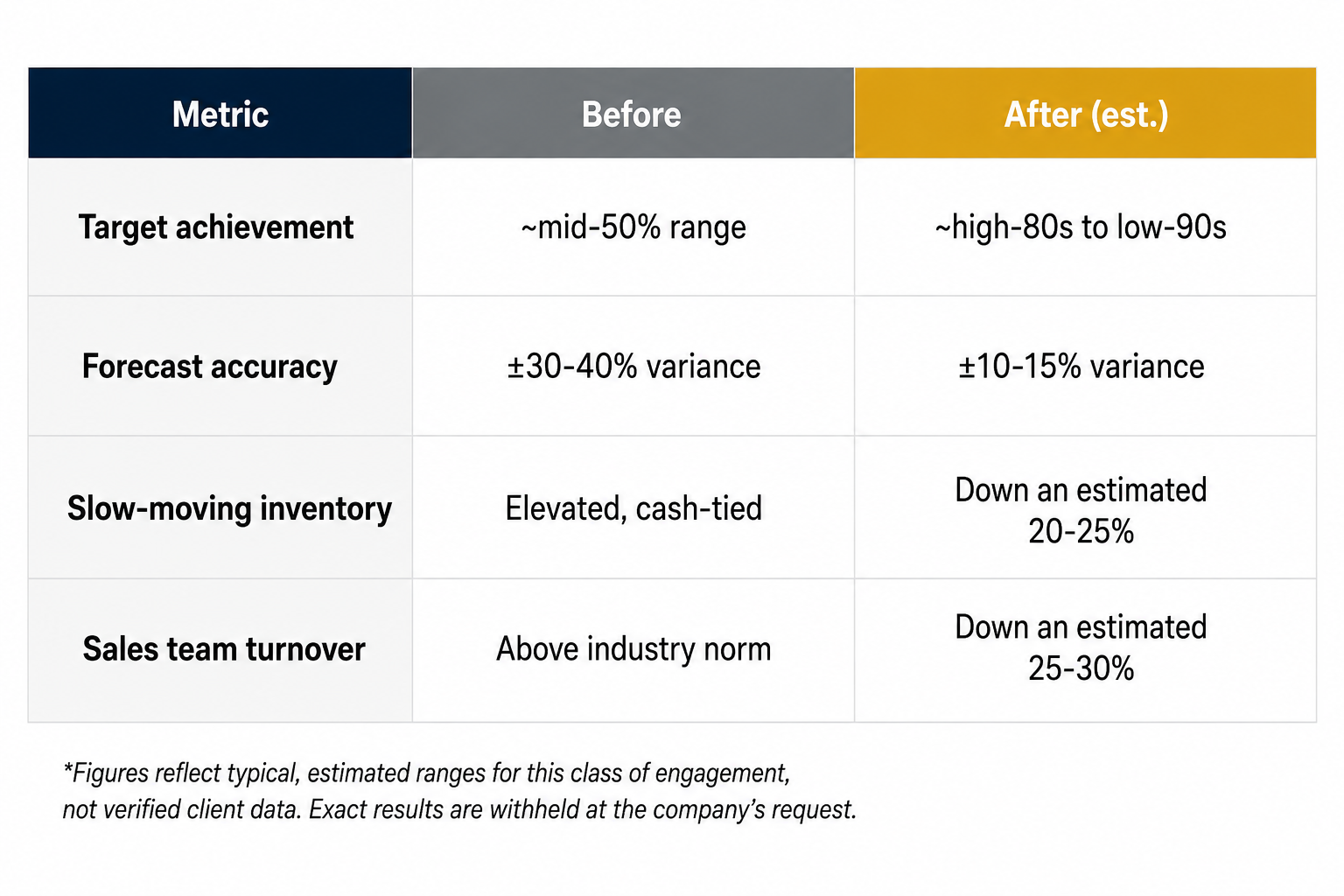
Target achievement climbed from the mid-50% range into the high-80s to low-90s (estimated)
Forecast accuracy tightened from a ±30-40% swing to roughly ±10-15% (estimated)
Inventory tied up in slow-moving stock dropped an estimated 20-25%
Sales team turnover fell an estimated 25-30%
Cross-department collaboration and forecasting confidence improved noticeably, per leadership
Leadership gained something harder to put a number on: trust.
Lessons for Business Leaders
A sales target should inspire performance, not discourage it.
Targets need to stretch a team, but they also need to reflect market reality. When the numbers disconnect from opportunity, people stop believing they can win, and once belief goes, performance follows it out the door.
Sales targets are never just numbers on a spreadsheet. They shape culture, they shape behavior, they steer operational planning, and they decide how people feel walking into work every morning.
Final Thought
Setting a sales target isn't about demanding a bigger number. It's about building a performance culture on clarity, accountability, and confidence.
Realistic targets don't lower ambition. They create momentum, and momentum is what turns effort into sustainable growth.
At Luxora Ventures, we help distribution and consumer goods businesses build practical sales strategies, measurable performance systems, and realistic growth plans that improve results without burning out the team.